Thinning Is Fire Mitigation, Not Deforestation
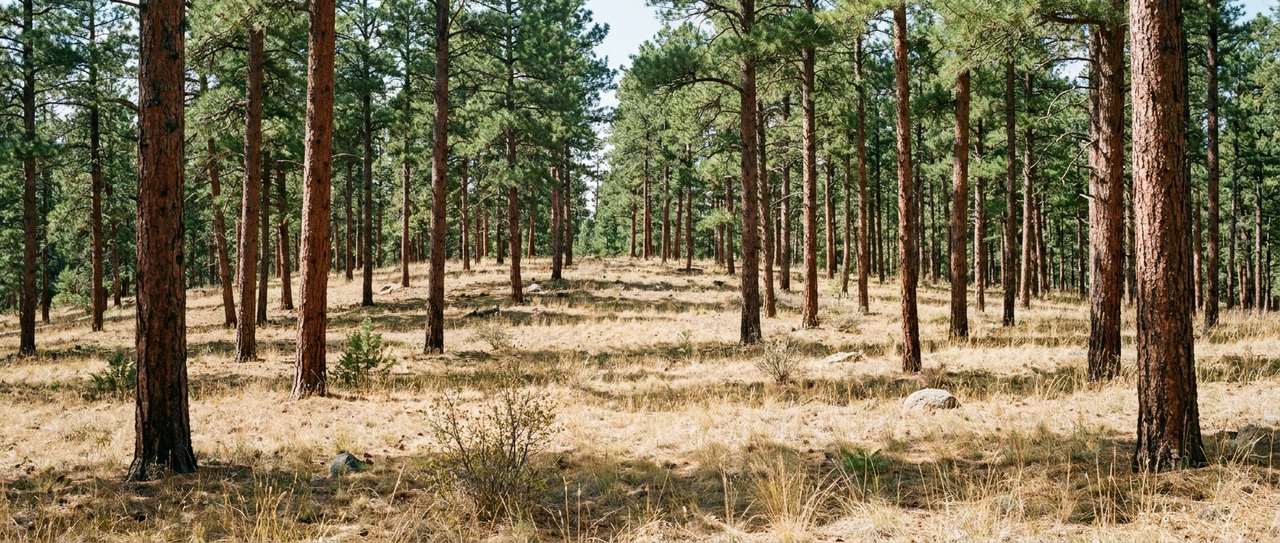
The healthiest ponderosa stands in the Pikes Peak region are the thinned ones. Historic foothills forest ran 40–60 mature trees per acre with open, grassy floors; a century of fire suppression pushed many neighborhoods to several times that density. Thinning restores the spacing that stops crown fire — and the trees you keep grow stronger for it.
- Crown spacing. Roughly 10 feet between mature canopies beyond the 30-foot line, more on slopes — so fire cannot jump tree to tree toward the house.
- Ladder-fuel pruning. Conifer limbs pruned up to 10 feet and understory shrubs cleared beneath them; the surface fire stays on the surface.
- Hazard trees down. Standing dead, beetle-hit and drought-stressed trees dropped and removed before wind or embers decide the timing for you.
- Deadwood out. Downed limbs and dry litter raked out of Zones 1–2, where embers land and start.
Beetle Kill, Drought Stress and Forest Health
Front Range ponderosa carries more than fire risk. Mountain pine beetle and ips beetle activity track drought cycles, and a stressed, overcrowded stand is where they start — too many stems competing for the same soil moisture leaves every tree weaker. Thinning is the treatment for both problems at once: the trees that remain get the water, grow thicker bark and wider crowns, and resist both beetles and fire better than the crowded stand did.
Watch for the warning signs on your own lot: fading crowns that go yellow-green before rust-red, pitch tubes on the trunk, sawdust at the base, woodpecker activity stripping bark. A beetle-hit tree will not recover — it is standing fuel on a countdown, and the beetles it hosts move to its neighbors. Hazard tree removal inside the same mobilization as thinning work is dramatically cheaper than calling a crane crew for an emergency removal after the tree dries and stiffens.
Licensed Work, Documented Results
Inside city limits, paid work on trees 15 feet or taller legally requires a City of Colorado Springs tree service business license — it is the first thing to ask any bidder for, and every crew we refer holds it along with full insurance. Work is photographed before and after and invoiced clearly, which is precisely the documentation Colorado's new insurance law (HB 25-1182) requires carriers to credit toward your wildfire risk score.
Thinning also pairs naturally with the city's calendar: limbs and small stems go curbside to CSFD chipping-program specs ahead of your region's week, and larger wood is bucked to firewood length or hauled. Call (719) 309-4206 for a free assessment of the stand around your home.