The Fuel That Defines the West Side
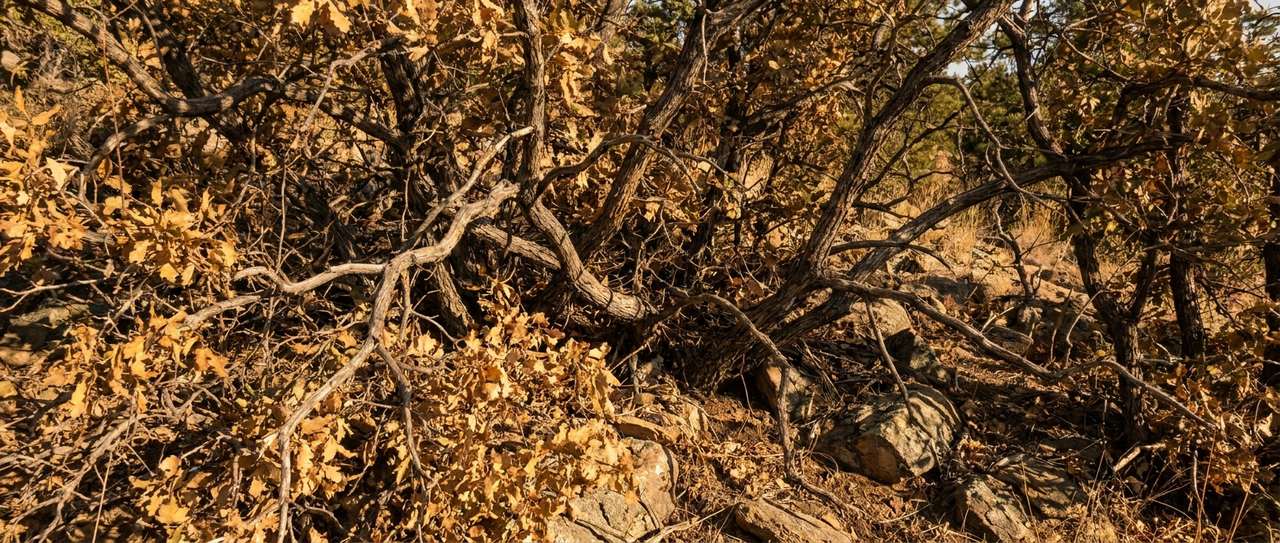
Gambel oak — scrub oak — is the defining wildfire fuel of Colorado Springs' west side. It carpets the hogbacks and foothill slopes from Cheyenne Cañon to Cedar Heights in dense, continuous thickets that cure out by late summer and burn hot, fast and low — a conveyor belt carrying ground fire from open space to siding. Dense oak fed the Waldo Canyon Fire's 2012 run into Mountain Shadows, where roughly 340 homes burned in a single evening.
Why Cutting Alone Fails
Gambel oak is clonal. The visible thicket is one organism feeding off a root network that has been there for decades — cut the tops and the roots push back stronger, often denser than before. That is why the neighbor who "cleared the oak" three summers ago is looking at a thicket again today, and why real scrub oak fire mitigation is a system, not a haircut:
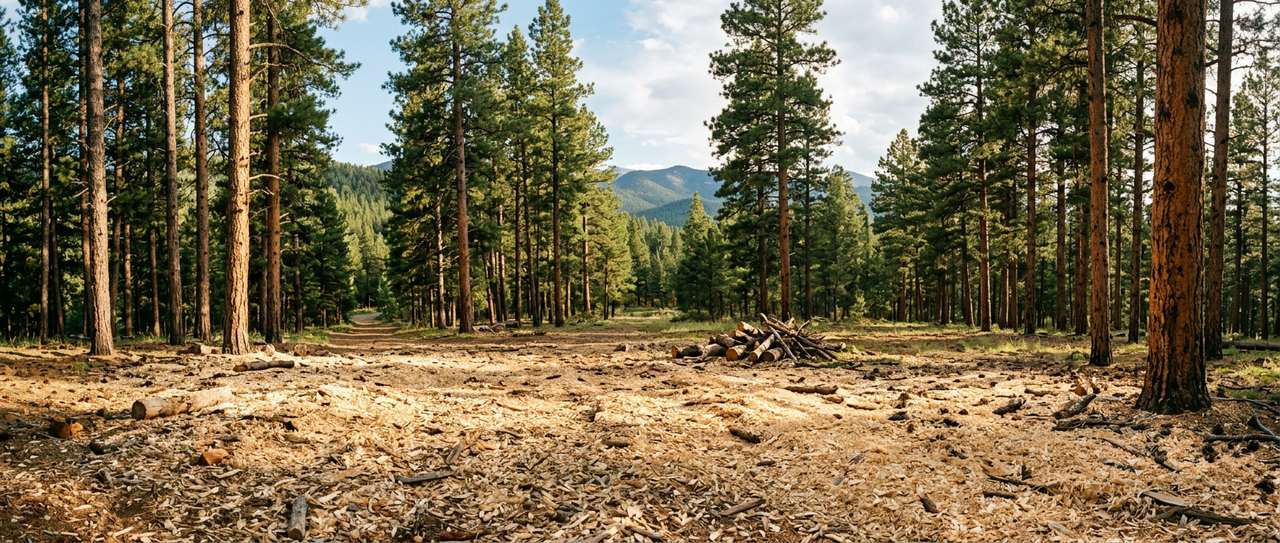
- Mastication. A drum masticator grinds standing oak into chips in minutes and leaves them as a tidy mulch layer that shades and suppresses the resprout.
- Island conversion. Rather than scorched-earth clearing, we break the continuous stand into separated islands — the CSFS defensible-space pattern that removes the fire path but keeps screening and habitat.
- The maintenance cycle. A light re-mow every 2–3 years catches the resprout while it is knee-high and cheap, instead of head-high and expensive.
When to Cut Scrub Oak
Timing changes both the price and the result. Late spring cutting — after leaf-out spends the roots' stored energy — weakens the resprout more than a winter cut of the same thicket. Summer work races the cure: by August the stand is dry enough to burn, so early-season scrub oak removal buys you protection for the same fire season you paid for it. Fall and winter cutting still works and often schedules faster; it simply concedes a stronger spring resprout, which the maintenance cycle catches anyway.
The one timing rule that always applies: cut ahead of your neighborhood's CSFD chipping window, so the slash leaves free. A Skyway homeowner who cuts in early July meets the Region 6 chipper on August 3; cut in mid-August and the pile waits for the October 26 second round or pays for private haul-off.
Where It Matters Most
Skyway, Broadmoor Bluffs, Cedar Heights, Peregrine, Mountain Shadows and the Mesa all back directly onto oak country — every one of them is inside CSFD's 143 WUI neighborhoods and on the free chipping schedule. We time hand-cut oak jobs so the slash hits the curb ahead of your region's chipping week; masticated jobs need no disposal at all. Call (719) 309-4206 and get the thicket priced before it cures out this season.