What Defensible Space Actually Means
Defensible space is the managed buffer that gives your home a fighting chance when fire arrives — and gives firefighters a safe place to defend it. Colorado State Forest Service guidance divides it into zones, and effective fire mitigation works them in order, from the walls outward.
- Zone 0 (0–5 ft): nothing combustible. Rock instead of bark mulch, no shrubs against siding, no firewood on the deck, gutters clean. Most home losses start with embers landing in this strip — not with a wall of flame.
- Zone 1 (5–30 ft): lean, clean and green. Trees limbed up to 10 feet, deadwood gone, grass short, ladder fuels broken so ground fire cannot climb into the crowns.
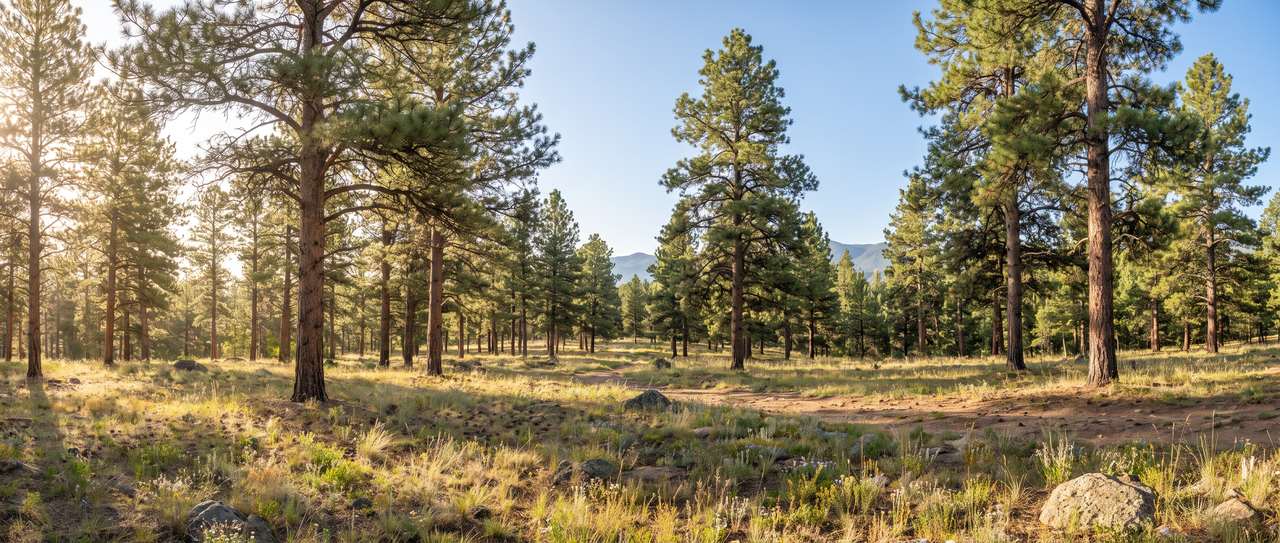
- Zone 2 (30–100 ft): thinned and spaced. Ten feet between mature crowns, Gambel oak clumps broken into islands, heavy fuels masticated. On flat ground 30–50 feet may do; on slopes, go to 100.
Slope Changes Everything
Fire moves uphill — preheating the fuel above it as it climbs. That is why the same house needs 30 feet of defensible space on a flat lot in Garden Ranch and 100 feet on a hillside in Cedar Heights or Broadmoor Bluffs. West-side properties on the hogbacks carry the double load of steep ground and continuous Gambel oak, and they are exactly where Waldo Canyon proved the point in 2012: 347 homes lost, most of them in Mountain Shadows.
Our crews work steep ground routinely — hand-felling where machines can't track, mastication where they can, and hauling slash to the curb in time for your CSFD chipping window.
What the Day of Work Looks Like
A defensible space crew works from the house outward, in the same order the zones are numbered. Morning: Zone 0 stripped — combustible mulch raked out, shrubs against siding removed, deck undersides cleared, firewood relocated. Midday: Zone 1 trees limbed to ten feet, deadwood dropped, ladder shrubs cut, grass knocked down. Afternoon: Zone 2 thinning to crown spacing, oak clumps broken up, and every branch that hit the ground cut and stacked curbside to CSFD chipping-program specs — or chipped on-site where the schedule calls for it.
Most single-lot defensible space projects finish in one to two crew-days. You get before-and-after photos of each zone and an itemized invoice naming the work — the exact package your insurance carrier and the state tax credit both want to see. Nothing is hauled to a landfill that the city's chipper would take free the following week.
Free Consultation First, Licensed Crew Second
Honest sequence: the CSFD Wildfire Mitigation Section will assess your property free and tell you what to remove — use that. Then call (719) 309-4206 and a licensed and insured crew turns the assessment into finished fire mitigation: cut, stacked, documented. Their own numbers say homeowners spent 48,829 hours doing this by hand last season. Yours don't have to be among them.